


A six-part lecture series exploring some of the most pressing questions facing Muslims today — from science, violence, and mental health to scripture, reason, and the modern secular world.
-
Accessibility
-
Contrast


Next Prayer in

 Al-Iman Amānah
Transform
Al-Iman Amānah
Transform
How can Muslims engage the difficult questions of our time without feeling that faith must constantly defend itself on someone else’s terms?
As a continuation of the Al-Īmān Amānah initiative, Faith on Its Own Terms is a six-part lecture series designed to engage contemporary questions with intellectual depth, confidence, and faithfulness to the Islamic tradition.
Led by Dr. Usaama Al-Azami, the series moves beyond surface-level debates to examine each question on its own terms. The aim is not simply to win arguments, but to equip participants with a faith that does not feel fragile when challenged.
The journey begins with concrete questions many Muslims encounter today, moves into how the Islamic intellectual tradition understands scripture, reason, and knowledge, and concludes by examining how Islam speaks to the wider modern condition.
Each session combines a focused lecture with extended dialogue, creating space for serious questions, reflection, and meaningful engagement.
Series Outline - The Six Sessions
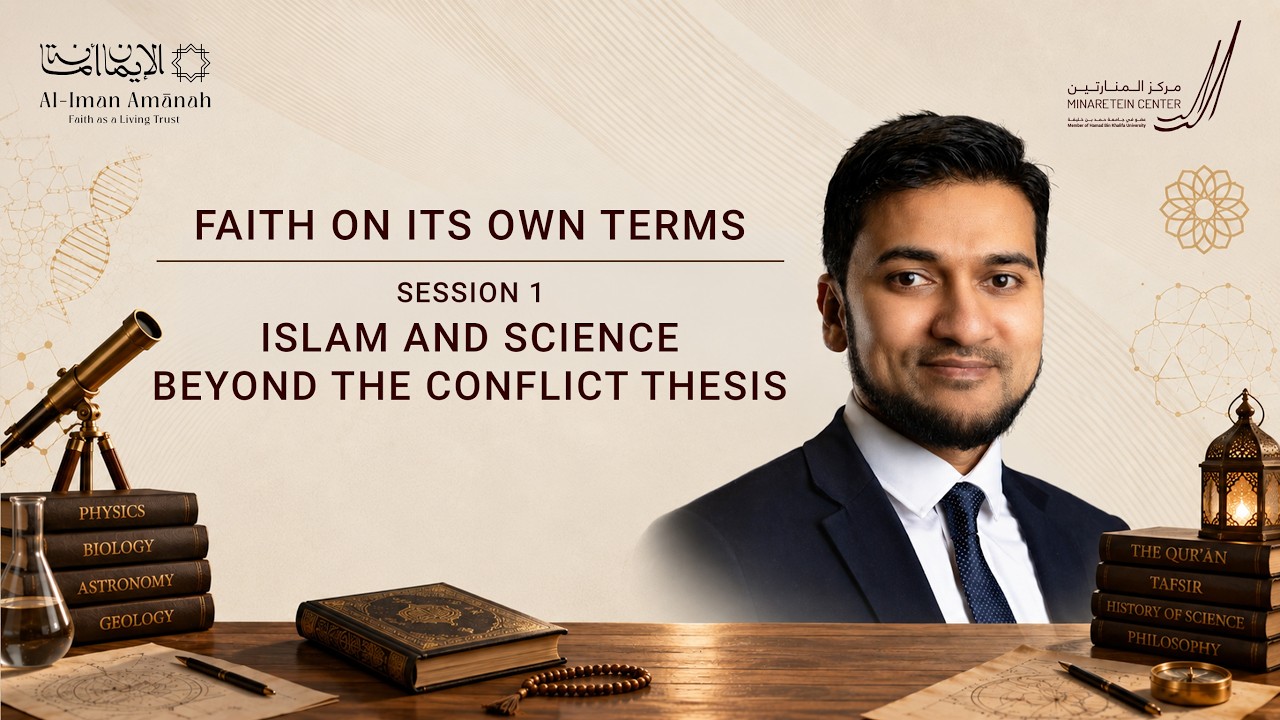
5 Sep | Session 1 — Islam and Science: Beyond the Conflict Thesis
View & Download Session 1 Slides
We are often told that science and religion are rivals, and that a thinking person must eventually choose between them. This session asks where that story came from, and why it does not survive close inspection. We distinguish what science actually claims from the philosophy that is smuggled in alongside it, and we turn to the Qur’an’s own summons to observe, to reason and to reflect. Along the way we take up the questions that trouble people most concretely, from evolution to the reports about the height of Adam.
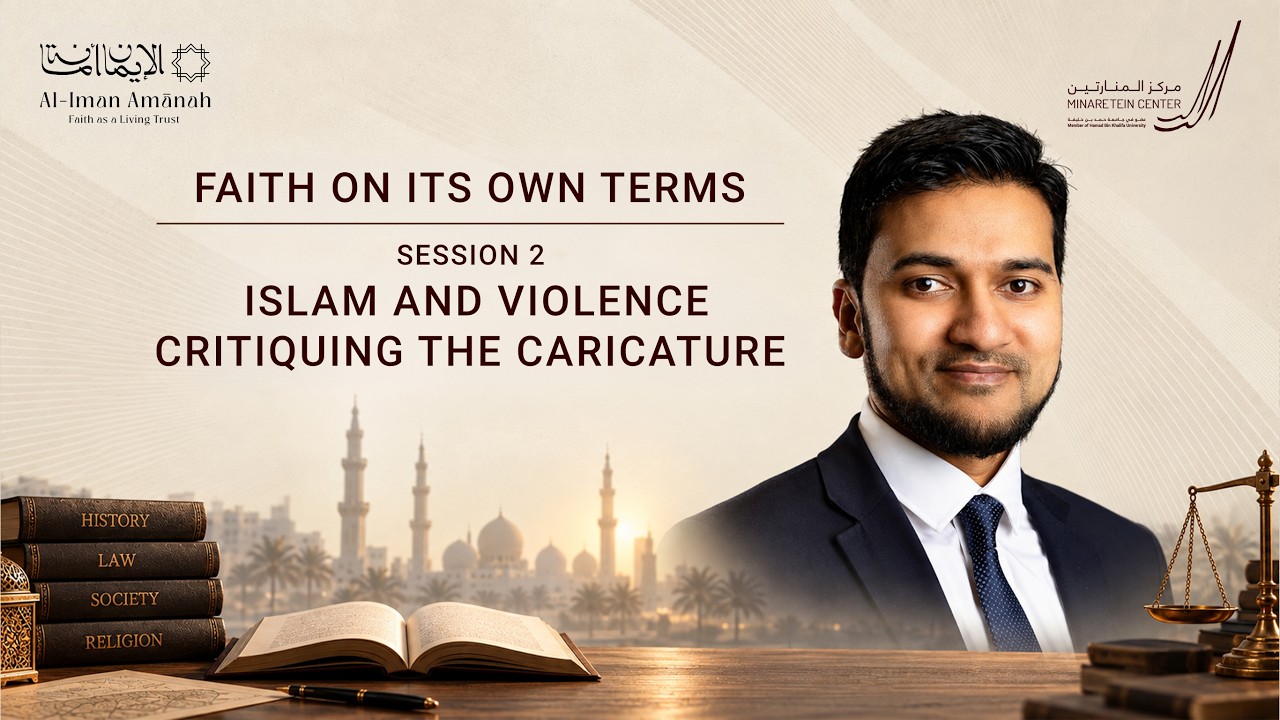
12 Sep | Session 2 — Islam and Violence: Critiquing the Caricature
View & Download Session 2 Slides
Few charges are levelled at Muslims more insistently than this one, and few are argued more loosely. This session takes the accusation seriously enough to examine it properly: what the historical record actually shows about religious and secular violence, and why the claim that religion is uniquely violent has been so systematically deconstructed by scholars who are not themselves believers. We distinguish violence committed in Islam’s name from violence its law prescribes, and we ask what the tradition itself gives us for criticising the former.
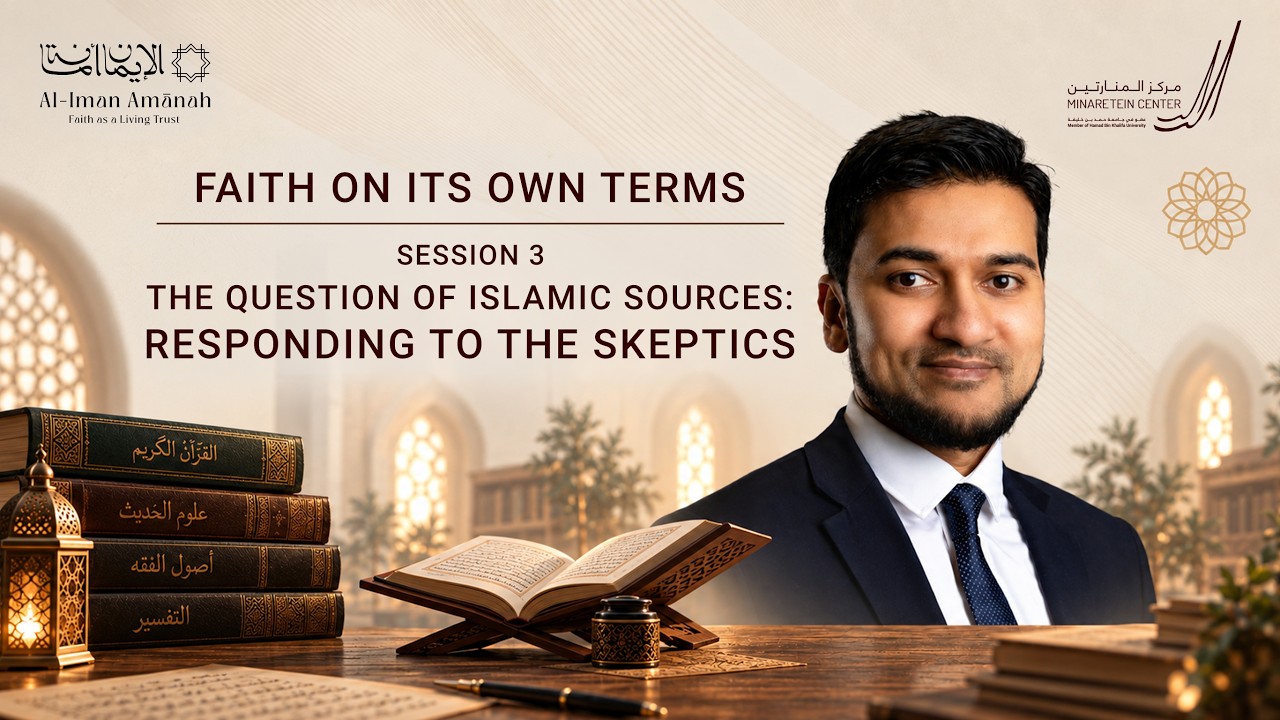
19 Sep | Session 3 — The Question of Islamic Sources: Responding to the Skeptics
View & Download Session 3 Slides
How do we know the Qur’an is what Muslims say it is, and how much can we trust the hadith? These questions now reach people through videos and threads rather than books, often in confident summaries of scholarship the speaker has not read. This session looks at what academic study of the sources has actually established, at where its sharper claims remain contested, and at the demanding standards of verification the Islamic tradition developed long before any of this. Recommended reading will be shared for those who wish to go further.
26 Sep | Session 4 — Faith, Doubt, and Mental Health
A conversation with Dr. Fahad Habib Khan
View & Download Session 4 Slides
Not every crisis of faith is an argument. Very often what presents itself as an intellectual objection began as something felt: exhaustion, loneliness, a prayer that seems to go nowhere, a mood shaped by hours on a screen. This session takes that seriously rather than treating it as a failure of conviction. In conversation with a colleague who works with these questions directly, we consider what the tradition offers those in difficulty, why seeking treatment is a Prophetic instruction rather than a weakness, and how doubt can be brought into the open instead of carried alone.
03 Oct | Session 5 — Reason and Revelation: The Sovereign Question
View & Download Session 5 Slides
Behind almost every question in this series lies an older one: when reason and revelation appear to pull in different directions, which has the final word? Muslim scholars have argued over this for more than a thousand years, and the answers they reached are more subtle than either the modern critic or the modern apologist tends to allow. This session traces that argument, and asks a further question that is rarely put: whether any human order, including a thoroughly secular one, ever really escapes it.
10 Oct | Session 6 — Beyond the Secular Frame: Islam and the Political Imagination
View & Download Session 6 Slides
We close by turning the question around. The secular and liberal assumptions that govern public life present themselves as neutral ground, the reasonable starting point that every serious person must accept. This session asks how they came to occupy that ground, how much of their standing rests on argument and how much on raw power, and what it means that Muslims can adopt them without noticing that they amount to a secular religion of their own. Setting aside the events of the day, we ask what becomes thinkable once that worldview is disrupted, and what a shared Ummatic vision might yet allow us to imagine, and to become.

Event Date
Sep 5, 2026 - Oct 10, 2026

Event Time
10:00 AM - 11:30 AM

Target Audience
Open to All

Language
English

Location
Auditorium, Minaretein

Share This:
Speaker:
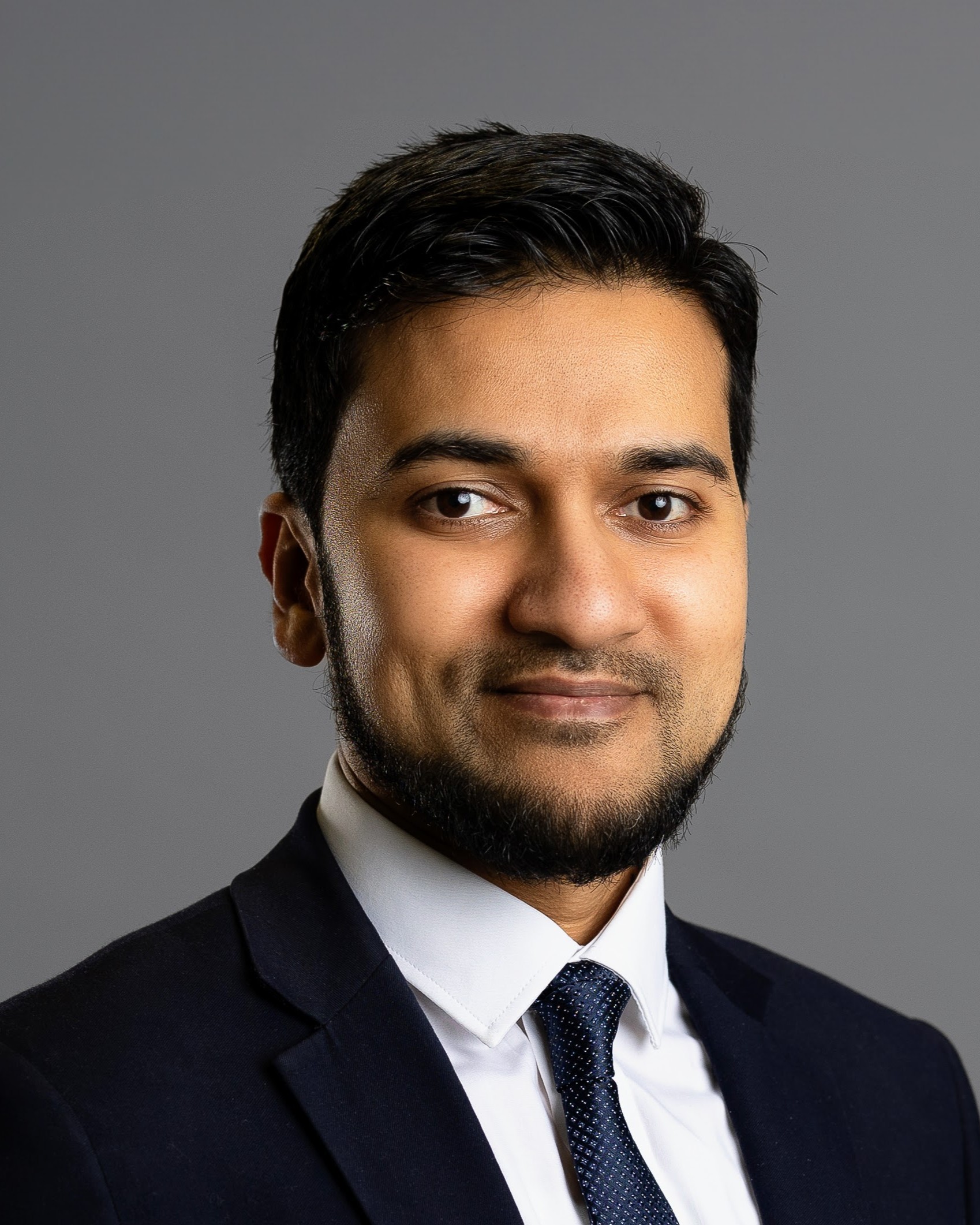
Dr. Usaama al-Azami is Assistant Professor in Contemporary Islamic Studies at the College of Islamic Studies, Hamad Bin Khalifa University. He read Arabic and Islamic Studies at the University of Oxford and holds a PhD in Near Eastern Studies from Princeton University. He has previously taught at the University of Oxford, where he was Departmental Lecturer in Contemporary Islamic Studies, and at the Vrije Universiteit Amsterdam. Alongside his university training he studied the traditional Islamic sciences with Shaykh Mohammad Akram Nadwi at the Al-Salam Institute. His research concerns modern Islamic thought, and the relationship between the Islamic scholarly tradition and modern political life.
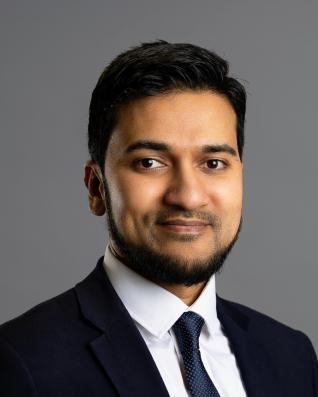
Dr. Usaama Al-Azami
Assistant Professor of Islamic Studies
1:40:29
Ep. 1 | Islam and Science: Beyond the Co...
Where does the idea that science and religion are rivals come from, and why does it not survive close inspection?
1:35:48
Ep. 2 | Islam and Violence: Critiquing t...
How well does the claim of Islam being inherently violent hold up when examined historically and intellectually?
1:42:57
Ep. 3 | The Question of Islamic Sources:...
How do we know the Qur’an is what Muslims say it is, and how much can we trust the hadith?